

How AI Development Is Transforming Digital Businesses in 2026
Digital businesses have entered a decisive new phase. For years, growth was synonymous with scale, more users, more markets, more headcount. But in 2026, that equation has shifted. Growth today is driven by intelligence. It’s about how your systems learn, adapt, and respond in real time to real-world behavior.
We are now seeing a clear divide. On one side are companies still operating on static software and manual decision-making. On the other hand, those embedding intelligent systems into their daily operations are pulling away. Not because they have bigger budgets, but because they make faster, smarter decisions.
This transformation is not about replacing people. It’s about reshaping how businesses operate, compete, and grow in a market defined by speed, data, and personalization. At RixDigi, we’ve partnered with companies across industries to implement AI development strategies that directly impact revenue, efficiency, and customer loyalty. In this article, we’ll explore exactly how that shift is unfolding, and how your digital business can lead it.
Worried About AI Replacing You? Here’s How to Flip the Script
It’s natural to worry about displacement. The narrative around AI has long been dominated by fear, fear that automation will eliminate roles, stifle creativity, or remove human control from critical processes. But the reality in 2026 looks very different.
The most successful companies are not using AI to replace people. They are using it to amplify human capability. They are removing friction, not humans. They are automating the repetitive so their teams can focus on the meaningful.
Consider what this looks like in practice. Instead of replacing entire departments, forward-thinking businesses are using intelligent systems to:
- Reduce repetitive, low-value operational work that drains energy and time
- Support faster, data-backed decisions at every level of the organization
- Enhance personalized customer interactions at a scale no human team could manage alone
- Free up specialists to focus on strategy, innovation, and creative problem-solving
The real advantage here lies in ownership. Businesses that build or customize their own intelligent systems retain control over logic, outcomes, and growth trajectory. They are not locked into black-box tools built for generic use cases. They own their edge.
Those who avoid AI entirely are not protecting their teams. They are falling behind competitors who move faster, respond smarter, and capture more value from the same data.
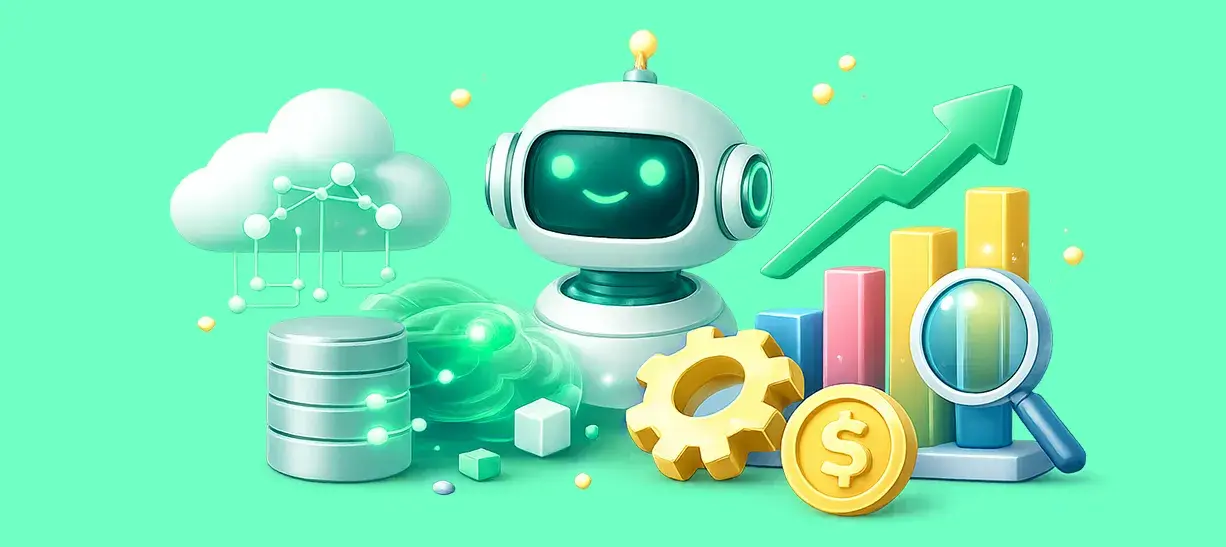
What Is Artificial Intelligence in Business? A Practical Definition
Let’s ground this in something concrete. In a business context, Artificial Intelligence (AI) refers to software systems that learn from data, identify patterns, and improve outcomes without requiring constant manual instruction.
Unlike traditional software that follows fixed, static rules, AI-powered systems adapt dynamically. They evolve based on:
- Real-time customer behavior signals
- Shifting market trends and external conditions
- Internal operational performance metrics
- Live data streams from websites, apps, and connected systems
For digital businesses, this represents a fundamental shift. You move from passive reporting to active intelligence. Instead of dashboards that tell you what already happened, you get systems that recommend what to do next.
AI-enabled systems can:
- Recommend specific actions rather than simply displaying charts and tables
- Automatically adjust marketing campaigns in response to performance signals
- Predict demand fluctuations, customer churn, or infrastructure issues before they escalate
- Deliver truly personalized user experiences across web, mobile, email, and support, without manual segmentation
At RixDigi, we define intelligent development as building systems that empower business decisions, not just automate repetitive tasks. It’s a subtle distinction, but it changes everything about how you approach technology.
How AI Development Is Reshaping Digital Business Models
1. Smarter, Faster Decision-Making at Every Level
In 2026, competitive advantage is measured in milliseconds and accuracy. The companies winning today are not those with the most data; they are those that act on it fastest.
AI systems now analyze vast, complex datasets in real time. This enables leadership teams to make evidence-based decisions instead of relying on intuition, incomplete reports, or retrospective analysis.
We see this playing out across functions:
- Sales forecasting is no longer based on historical averages. It is dynamic, incorporating live customer intent signals, behavioral data, and real-time pipeline activity.
- Marketing optimization has moved beyond A/B testing cycles that take weeks. AI adjusts bids, creatives, and audience targeting in real time based on performance signals.
- Financial planning now incorporates predictive modeling. Finance teams can stress-test scenarios, model cash flow under different conditions, and make proactive adjustments rather than reactive cuts.
- The result is reduced risk and improved outcomes, especially critical in fast-moving digital markets where waiting even a week can mean losing significant ground.
2. Personalized Customer Experiences at Scale
Customers in 2026 do not tolerate generic messaging. They expect relevance, and they recognize when a brand is simply broadcasting rather than engaging.
AI development enables businesses to deliver tailored experiences across every touchpoint, including websites, mobile apps, email, paid media, and support channels, without the manual overhead of traditional segmentation.
This is not about inserting a customer’s first name into an email. It is about:
- Serving different website content based on real-time intent and past behavior
- Adjusting product recommendations dynamically as preferences shift
- Triggering personalized offers when a user shows signs of hesitation or abandonment
- Adapting email frequency and messaging based on engagement patterns
The results are measurable and significant:
- Higher engagement and click-through rates
- Increased conversion rates and average order value
- Stronger long-term customer loyalty and retention
At RixDigi, our project data consistently shows that AI-driven personalization outperforms static, one-size-fits-all customer journeys, often by wide margins.
3. Automation That Learns and Improves Over Time
Traditional automation follows scripts. It executes the same instructions the same way, every single time. That is useful for consistency, but it does not drive improvement.
Intelligent automation is different. It learns from every interaction and continuously refines its performance.
In 2026, businesses are deploying adaptive automation across critical functions:
- Customer support workflows that intelligently route tickets, suggest responses, and even resolve common issues without human intervention, while escalating complex cases to the right specialist
- Lead qualification processes that score and prioritize prospects based on behavioral signals, not static demographic rules
- Inventory and supply chain planning that anticipates disruptions and adjusts procurement cycles proactively
- Content delivery and optimization that personalizes user journeys based on real-time engagement and intent
The key difference is adaptability. These systems do not degrade in value over time. They compound it. Every interaction makes them slightly better, slightly more accurate, slightly more valuable.
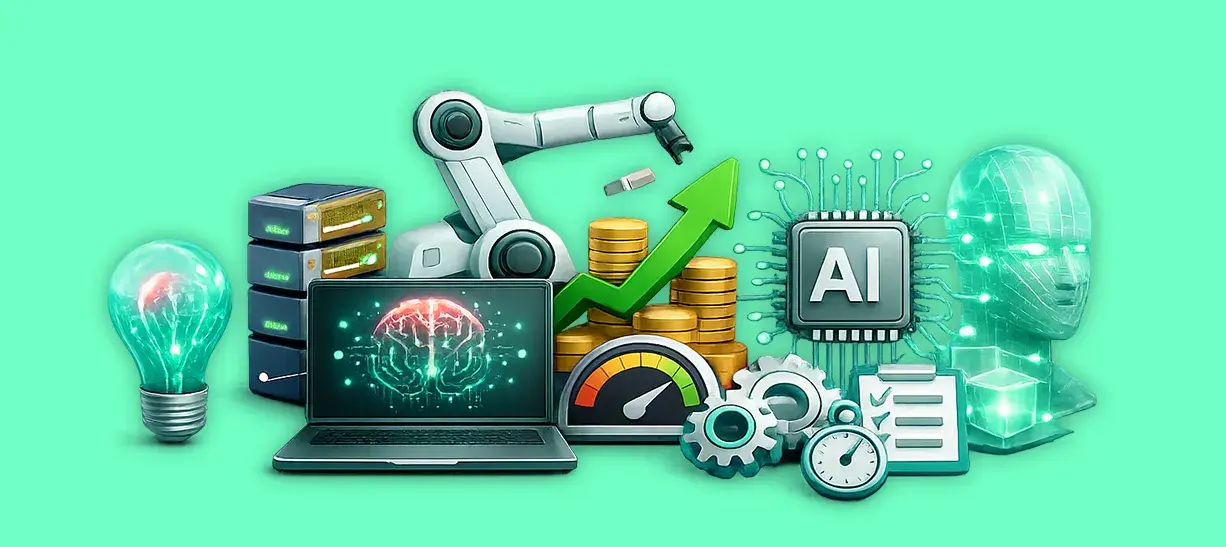
Why Digital Businesses Are Investing in AI Development Now
Efficiency Without Sacrificing Quality or Control
Manual operations are the enemy of growth. They are slow, error-prone, and do not scale linearly. As businesses grow, the complexity of manual processes multiplies.
Intelligent development changes this equation. It reduces operational overhead while maintaining and often enhancing. quality, consistency, and brand integrity.
Businesses that invest in AI gain:
- Dramatically faster execution cycles across campaigns, product updates, and customer response
- Lower operational and labor costs over time
- Fewer human errors, inconsistencies, and oversights
- Scalability that grows with the business, not by adding headcount
This is especially valuable for scaling digital companies. When your systems are intelligent, you can grow revenue without proportionally increasing team size or operational complexity.
Sustainable Competitive Advantage Through Proactive Insight
Data alone is abundant. Insight is scarce.
Companies that invest in intelligent development are not just collecting more data; they are extracting more value from it. They gain:
- Early detection of shifting market trends and emerging consumer behaviors
- More accurate forecasting and predictive modeling capabilities
- Clear, actionable visibility into what is actually driving performance
This enables faster, smarter responses to market shifts and customer needs. In 2026, that is not a nice-to-have. It is a definitive competitive advantage.
Why Your Business Should Use Artificial Intelligence
The business case for AI in 2026 is no longer theoretical. It is grounded in measurable outcomes.
1. Accelerate Growth with Intelligent Systems
Companies using AI move faster. They test more, learn faster, and scale what works. Growth becomes a function of intelligence, not just effort.
2. Understand Your Customers More Deeply
Demographic segmentation is dead. AI enables behavioral understanding, what customers actually do, not just who they are.
3. Build Scalable, Resilient Operations
AI allows you to grow without proportional increases in cost or complexity. Your systems scale with you.
4. Minimize Costly Human Error
High-volume, repetitive processes are prone to human error. AI reduces those risks while freeing your team for higher-value work.
5. Drive Improved Profitability
AI enhances both top-line revenue and bottom-line efficiency. It is one of the few investments that can simultaneously improve growth and margins.
Businesses that delay AI adoption are not saving money. They are accumulating technical debt, operational drag, and competitive vulnerability.
RixDigi 2026 AI Report: Key Adoption Trends and Impacts
Our internal project data and ongoing market analysis reveal several clear patterns about AI adoption in 2026.
First, companies using custom intelligent systems report 30–50% higher operational efficiency on average compared to those relying on manual processes or generic tools.
Second, personalized digital experiences directly drive measurable revenue growth. Our clients consistently see increases in customer lifetime value ranging from 15% to 25% after implementing AI-driven personalization.
Third, predictive analytics reduces planning errors and operational waste by up to 40%. Businesses that forecast with AI make fewer purchasing mistakes, allocate resources more effectively, and respond faster to demand shifts.
Fourth, businesses with tailored AI development consistently outperform those relying on off-the-shelf tools. Generic solutions provide generic results. Custom intelligence delivers competitive differentiation.
The data confirms what we observe daily: building business intelligence is no longer optional; it is foundational.
What’s Top of Mind for Enterprise Leaders Considering AI in 2026?
Enterprise conversations about AI have matured significantly. We are no longer debating whether AI matters. The focus has shifted to implementation, governance, and long-term value.
Today’s leaders are focused on four key pillars:
1. Data Security and Governance
As AI becomes more embedded, control over data assets becomes critical. Leaders want systems that maintain compliance, protect customer information, and keep business logic under their own control.
2. Ethical and Transparent Implementation
Black-box models are falling out of favor. Enterprises demand explainability; they need to understand how decisions are made and ensure fairness, accountability, and regulatory alignment.
3. Seamless Integration with Existing Systems
AI cannot exist in isolation. It must work with current tech stacks, data pipelines, and operational workflows. Integration is no longer an afterthought; it is a primary requirement.
4. Long-Term Scalability and Maintainability
Leaders are thinking in years, not months. They want solutions that will grow with them, adapt to future needs, and not create new technical debt.
At RixDigi, we support enterprises with structured development frameworks that balance innovation with reliability, security, and governance.
From Strategy to Execution: How RixDigi Helps Digital Businesses Transform
Every business has a different starting point. Some need a high-level strategic roadmap before touching code. Others are ready to begin implementation immediately. Many fall somewhere in between.
- Common starting points include:
- A strategic AI adoption roadmap aligned with business goals and competitive positioning
- A phased technical implementation plan that delivers value incrementally
- A comprehensive audit of existing systems, data readiness, and integration requirements
- A full custom development partnership for end-to-end solution delivery
At RixDigi, we act as a long-term technology partner, not just a service provider. We do not build systems and walk away. We ensure every intelligent system we deliver aligns directly with measurable business outcomes, and we stay alongside you to optimize and evolve those systems over time.
Our proven approach focuses on:
- Business-First Strategy – Technology exists to serve outcomes, not the other way around.
- Custom System Development – Solutions engineered for your unique challenges, not repurposed from generic templates.
- Seamless Integration – AI that enhances your existing stack rather than disrupting it.
- Scalable Architecture – Foundations that support growth, not constrain it.
- Ongoing Optimization – Continuous refinement, learning, and improvement post-launch.
We do not sell trends. We build systems that deliver measurable, repeatable, scalable results.
Final Thoughts: The Core of Digital Transformation in 2026
Digital transformation has meant many things over the past decade. It started with moving to the cloud. Then it meant adopting agile methodologies. Then it was about becoming data-driven.
In 2026, digital transformation means something simpler and more profound. It is no longer about adopting the latest tools or following industry trends. It is about baking intelligence into the core of your business operations and strategy.
The companies that lead the next decade are not those with the biggest AI budgets. They are the ones that integrate intelligence into how they make decisions, serve customers, and operate daily.
They treat data as a strategic asset, not a byproduct. They build systems that learn and improve over time. They align technology investments directly with business outcomes. And they partner with organizations that build for long-term capability, not short-term convenience.
The window for early-mover advantage is still open, but it is narrowing. Companies that act decisively now will define the next decade of digital growth. Those who wait will spend that decade responding to markets shaped by others.
RixDigi is ready to help you lead that change.


